Why Are Red Steel Buildings Popular Worldwide?
A red steel building is easy to notice: its painted frame stands out against a pale sky, green fields, or a row of gray warehouses. Yet color alone does not explain its worldwide appeal. Owners and builders often choose steel for practical reasons, including its strength, predictable fabrication, and ability to span open interior spaces. A workshop may need room for machinery; a farm shed may need clear access for equipment. In both cases, the structure can be planned around the work inside.
There is more to consider. Steel components are commonly manufactured to specified dimensions, which can support faster assembly when design, delivery, and site preparation are well coordinated. Protective coatings can also help resist corrosion, but performance depends on the product, local climate, and maintenance. Red is not a guarantee of durability. It is a visible finish, and its appearance may fade or require care over time.
This guide explores why red steel buildings are popular across different regions, from their visual impact to their construction benefits. It also looks at cost, design flexibility, insulation, and upkeep. The details matter. A building suited to a dry inland site may need different coatings and moisture control near the coast. And steel is not automatically the best choice for every project. Understanding both its strengths and its limits helps explain why these buildings continue to attract attention worldwide.
What Defines a Red Steel Building?
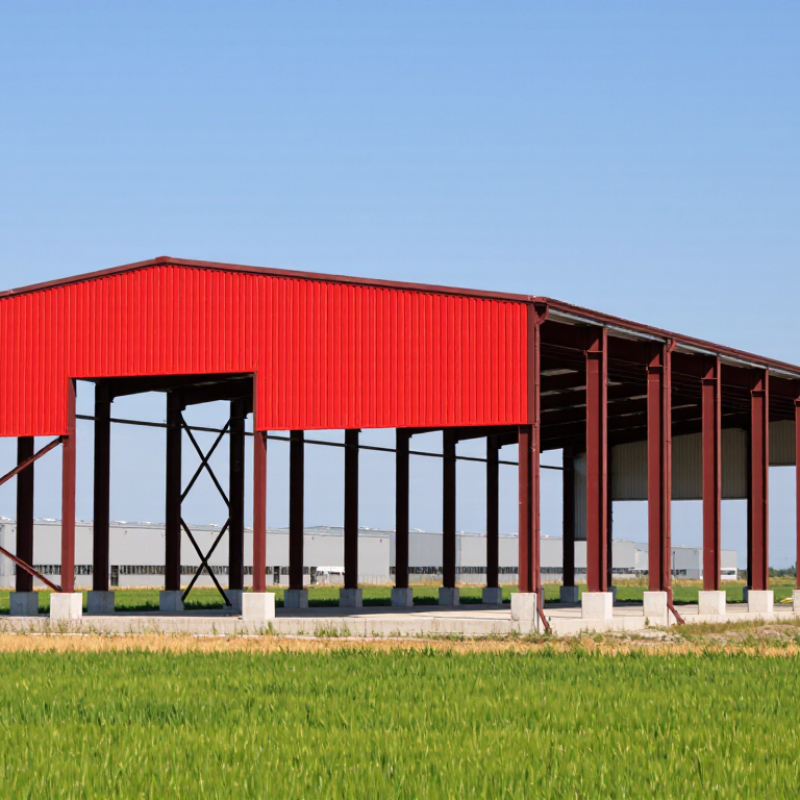
A red steel building is generally a steel-framed structure with a red-colored protective coating, often a shop-applied primer. “Red” describes the finish, not a separate structural system. The frame may use columns, beams, and roof purlins to carry loads, while metal panels or other cladding enclose the building. Look closely at a cut edge or bolt connection: the coating may not cover every surface equally. Primer alone may not provide the long-term weather protection a site needs.
The term is a little imprecise. Some suppliers use it for buildings made from red-oxide-primed steel, while others mean any steel building finished in red. Specifications should identify the coating, thickness, and maintenance requirements, rather than relying on color alone. The American Institute of Steel Construction reports that about 98% of structural steel is recovered for recycling at the end of its service life. That figure describes recovery, not guaranteed reuse. Scale matters, too: worldsteel reported 1,892.2 million tonnes of crude steel production worldwide in 2023. Still, a red finish does not reveal the frame’s grade, coating performance, or structural capacity; those details belong in project documents.
Why Are Red Steel Buildings Popular Worldwide? — What Defines a Red Steel Building?
| Dimension | Realistic Definition or Characteristic | Why It Matters Worldwide |
|---|---|---|
| Meaning of “Red” | The word “red” usually describes the building’s exterior color or its red-toned protective coating. It does not, by itself, identify a unique structural grade of steel. | A distinctive red finish improves visual recognition and can complement agricultural, commercial, industrial, and rural surroundings. |
| Primary Structure | A red steel building normally uses a structural frame made from fabricated steel members, such as columns, rafters, beams, or cold-formed secondary framing. | Steel framing provides a high strength-to-weight ratio and can support large open interior areas with relatively few internal columns. |
| Exterior Cladding | Walls and roofs are commonly formed from profiled steel panels. The red appearance may come from a factory-applied paint system, a metallic coating, or another specified finish. | Panelized construction allows fast enclosure of the structure and offers consistent dimensions for transport, installation, and maintenance. |
| Durability | Service life depends on steel thickness, coating type, edge protection, drainage, environmental exposure, installation quality, and scheduled maintenance. | Properly selected coating systems help protect steel from moisture and corrosion in different climates, including humid, coastal, and cold regions. |
| Fire Performance | Steel is non-combustible, but it can lose strength when exposed to high temperatures. Fire resistance therefore depends on the complete structural design and any required protection system. | This distinction supports accurate code compliance and prevents the mistaken assumption that an unprotected steel frame is automatically fire-resistant. |
| Typical Applications | Common uses include farm buildings, workshops, warehouses, storage facilities, aircraft hangars, garages, retail units, and light industrial spaces. | The same basic framing concept can be adapted to different functions, site conditions, clear-span requirements, and local building regulations. |
| Construction Speed | Many components can be fabricated and cut to design before delivery, allowing erection to proceed through bolted connections and panel installation. | Off-site fabrication can reduce on-site processing, shorten the weather-exposed construction period, and make project scheduling more predictable. |
| Design Flexibility | Steel buildings can be designed with different bay spacings, roof forms, wall heights, doors, windows, insulation systems, and interior layouts. | Flexibility makes them suitable for both standardized buildings and projects that require future expansion or changes in use. |
| Weather Adaptability | Structural design must account for local actions such as wind, snow, seismic effects, rain, temperature changes, and, where relevant, coastal exposure. | International popularity comes from the ability to engineer the same general building type for different regional climate and loading conditions. |
| Energy Efficiency | Steel panels alone do not determine energy performance. Insulation, thermal bridges, air sealing, ventilation, roof design, and doors are also important. | A well-designed envelope can improve indoor comfort and reduce heating or cooling demand, while poor detailing can increase energy loss. |
| Sustainability | Steel can be recovered and recycled at the end of a building’s service life. The overall environmental impact also depends on material quantities, transport, coatings, insulation, and building lifespan. | Designing for durability, efficient material use, maintenance, disassembly, and reuse can improve the building’s life-cycle performance. |
| Maintenance Needs | Maintenance commonly includes inspecting fasteners, joints, sealants, roof drainage, scratches, exposed edges, corrosion, and damaged panels. | Regular inspection helps preserve the protective finish and allows small defects to be repaired before they become larger problems. |
| Standards and Approvals | Design and construction should follow the applicable local building codes, structural steel standards, fire requirements, energy rules, and permitting procedures. | Compliance is essential because wind, snow, seismic, fire, corrosion, and occupancy requirements vary by location. |
| Main Reason for Popularity | The combination of recognizable appearance, structural efficiency, adaptable layouts, relatively fast assembly, and broad application range defines the appeal of red steel buildings. | These advantages make the building type practical for owners seeking durable, functional, and visually distinctive space without relying on a particular company or brand. |
Note: A red steel building is defined primarily by its steel construction and red exterior finish; exact structural systems, coatings, dimensions, and performance must be specified for the individual project and local conditions.
Related Posts
-
What Are Red Iron Buildings and How Much Do They Cost?
-
2026 Best Red Iron Steel Buildings for Global Buyers
-
How to Choose the Best Steel Building Systems?
-
What Are Engineered Steel Buildings and How Do They Work?
-
What Are the Top Engineered Steel Buildings?
-
How to Choose Pre Engineered Buildings in 2026
 Getting the Most Out of Your Metal Building
 Newsletter September 2025
 Construction Benefits to Know About the One Big Beautiful Bill Act
 Unexpected Uses for Metal Buildings You Might Not Have Thought Of
 The Most Common Metal Building Misconceptions We Hear (Part 2)
 Vulcan Steel Structures Marks 40 Years of Innovation and Growth in Metal Building Manufacturing