Top 10 Steel Building Structure Manufacturers in China
China’s steel sector serves projects ranging from compact workshops to logistics hubs and multi-story industrial buildings. Choosing a manufacturer, however, takes more than comparing prices or factory photographs. Buyers need to examine engineering capacity, fabrication quality, delivery planning, and experience with similar projects. Small details matter.
This guide introduces ten steel building structure manufacturers in China. It is designed to help readers compare providers, not declare one company best for every project. David P. Billington, a structural engineer and historian, described structural art as “the art of making buildings and bridges that are not only efficient and economical but also elegant.” That idea applies here: a successful steel building must work well, use materials thoughtfully, and suit its intended setting.
The profiles consider practical signals such as design support, production capabilities, project references, quality-control processes, and communication. Where available, readers should confirm these details directly and request drawings, specifications, and relevant certifications. A polished website is not proof of consistent delivery. Nor does a large factory guarantee a good fit. Project requirements vary, and this overview cannot verify every claim or capture every change in a manufacturer’s operations. Use it as a starting point. Then assess each candidate against your site conditions, schedule, budget, and technical needs.
Steel Building Structures: Types, Features, and Applications
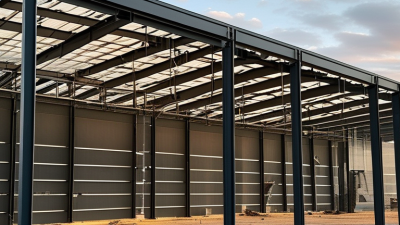
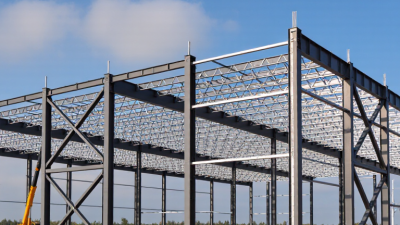
Steel building structures include portal frames, roof trusses, space frames, and braced or moment-resisting frames. Portal frames suit warehouses and workshops: tapered columns and rafters create wide, open interiors. Trusses use triangular members to cross longer spans with less material. Space frames distribute loads in several directions, making them useful for exhibition halls and arenas. Details matter. Connections, bracing, and foundations shape real-world performance.
World Steel Association’s World Steel in Figures 2024 reports about 1.89 billion tonnes of crude steel production in 2023; only part serves construction. Member size and layout depend on span, wind, snow, equipment loads, and future changes. Still, lightweight is not automatically greener. The 2023 Global Status Report for Buildings and Construction estimates the sector produced 37% of energy- and process-related CO2 emissions in 2022. That figure covers buildings and construction broadly, not steel frames alone. Designers should consider material quantities alongside insulation, airtightness, and building operations. A small connection detail can complicate erection. It deserves careful review.
Steel frames also suit multistorey offices, factories, and modular buildings, where prefabricated components can speed on-site assembly. Their strength-to-weight ratio can reduce structural mass, but fire protection, corrosion control, and inspection access need project-specific planning. A coastal site, for example, may require a different protective system from a dry inland warehouse. Safety margins matter.
Structural Steel Grades: Minimum Yield Strength
A comparison of specified minimum yield strength for commonly used structural steel grades.
Values are in megapascals (MPa). EN 10025 values shown apply to material thicknesses up to 16 mm; ASTM grade requirements can vary by product form and dimensions. Actual design properties should be verified against the applicable standard and project specifications.
China’s Steel Structure Manufacturing Industry
China’s Steel Structure Manufacturing Industry
China’s steel structure industry benefits from an enormous domestic steel supply, but raw output alone does not measure fabrication capability. World Steel Association’s World Steel in Figures 2024 reports that China produced 1,019.1 million tonnes of crude steel in 2023, about 54% of global output. This scale supports access to plate, sections, and processing capacity. It does not guarantee consistent weld quality or on-time delivery.
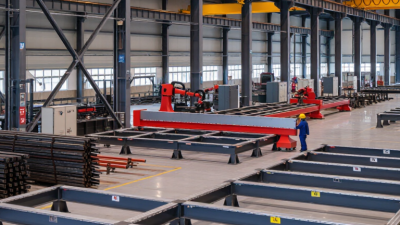
Manufacturers turn steel into columns, beams, trusses, and modular building frames. A finished member may pass through cutting, drilling, welding, inspection, and coating before shipment. Details matter: hole positions must align on site, and protective coatings must suit the project’s exposure. The International Energy Agency’s Iron and Steel Technology Roadmap estimates that steelmaking accounts for roughly 7% of global energy-related CO₂ emissions. That pressure is encouraging greater attention to efficiency and lower-emission production, though progress varies across facilities.
Buyers should distinguish national production figures from factory-level performance. A country’s crude-steel tonnage says little about a supplier’s dimensional tolerances, traceability records, or ability to manage design changes. This gap is easy to overlook. Audits, sample inspections, and clear technical specifications provide more useful evidence than scale alone. Not every project needs the same balance of price, speed, and fabrication complexity.
How to Compare Steel Building Structure Manufacturers
When comparing steel building structure manufacturers, look past headline capacity. The World Steel Association reported 1,005.1 million tonnes of crude steel production in China in 2024. That scale shows a deep supply base, but it does not prove a fabricator can meet your drawings or delivery schedule. Ask for recent project records, workshop capacity, and documented inspection steps. Small details matter.
Compare each quotation against the same specification: steel grades, member sizes, connection design, fabrication tolerances, and corrosion protection. Request material test certificates and traceability from the steel batch to each marked component. Check welding qualifications and inspection records, not just a general quality claim. For export projects, clarify packing, shipping responsibilities, and the documents supplied. A delayed drawing approval can matter as much as a delayed shipment.
The World Steel Association’s 2024 sustainability indicators also make emissions and material efficiency relevant comparison points. Ask whether suppliers can provide product-level environmental data; broad company claims are not enough. Visit the workshop if practical, and inspect finished welds, coating coverage, and component labels. A spreadsheet can miss what a factory visit reveals. It can also create false confidence: one visit cannot verify every shift or every batch, so keep independent inspection in the plan.
Profiles of 10 Leading Steel Building Structure Manufacturers in China
China’s steel building sector includes manufacturers with very different strengths. These ten profiles highlight capabilities buyers can compare, rather than claim a verified ranking.
A design-led producer may turn architectural drawings into detailed connection plans.
A large-scale fabricator often handles factory halls and warehouses, where repeatable frames matter.
A modular-building specialist prepares columns, beams, and wall panels for faster site assembly.
An industrial-project supplier may focus on workshops, cranes, and heavy roof loads.
A regional fabricator can offer closer site coordination, though its production capacity should be checked.
A cold-formed steel specialist serves lighter structures and smaller spans.
A bridge-and-infrastructure fabricator works with large sections and demanding inspection records.
An agricultural-building maker may provide practical sheds with clear-span interiors.
An export-oriented supplier typically coordinates packing and shipping documents, but delivery terms deserve careful review.
A renovation-focused producer can design replacement members around existing buildings, where measurements are rarely perfect.
For any candidate, request recent project references, material traceability documents, welding procedures, and inspection records. Compare drawings against the actual scope, not just the quoted tonnage. A factory visit can reveal storage practices and fabrication flow. Details matter. Even a polished portfolio cannot confirm that a proposed connection suits your site conditions.
Key Factors for Choosing a Chinese Steel Structure Manufacturer
Choosing a Chinese steel structure manufacturer takes more than comparing quotations. China produced 1,019.1 million tonnes of crude steel in 2023, according to the World Steel Association’s World Steel in Figures 2024. That scale shows strong supply capacity, but it does not prove a particular factory can meet your project’s requirements. Ask for recent, comparable project records and verify who handles design, fabrication, coating, and installation.
Inspect the quality system closely. Request sample material certificates, weld inspection records, dimensional tolerance reports, and coating thickness readings. A useful factory audit follows one member from incoming steel to final dispatch; paperwork should match the piece marks on the steel. Check how revisions are controlled, too. A missed drawing update can mean costly rework. A polished brochure is not evidence. A factory visit helps, but it cannot replace independent inspection and clear acceptance criteria.
Environmental data also deserves scrutiny. The 2024 Global Status Report for Buildings and Construction, published by UNEP and GlobalABC, states that buildings and construction accounted for 34% of global energy demand and 37% of energy- and process-related CO₂ emissions in 2022. Ask whether a supplier can document steel origin, recycled content, and project-level emissions assumptions. Compare like with like: boundaries and calculation methods matter. Some figures may remain estimates; note that gap rather than treating every claim as equally reliable.


 Getting the Most Out of Your Metal Building
 Newsletter September 2025
 Construction Benefits to Know About the One Big Beautiful Bill Act
 Unexpected Uses for Metal Buildings You Might Not Have Thought Of
 The Most Common Metal Building Misconceptions We Hear (Part 2)
 Vulcan Steel Structures Marks 40 Years of Innovation and Growth in Metal Building Manufacturing