10 Steel Construction Tips for Global Buyers

Steel construction is no longer a local purchasing decision. Buyers compare mills, standards, freight routes, coatings, and project risks across borders. World Steel Association data reports approximately 1.89 billion tonnes of crude steel production in 2023. That scale creates opportunity, but it also increases specification confusion and supplier variation.

The International Energy Agency identifies iron and steel as responsible for roughly 7% to 9% of global energy-related carbon dioxide emissions. Therefore, material selection now affects structural performance, project cost, and sustainability reporting. A buyer may receive a polished quotation, yet the real differences can appear in mill certificates, yield strength, weldability, coating thickness, or dimensional tolerances. Small details matter.

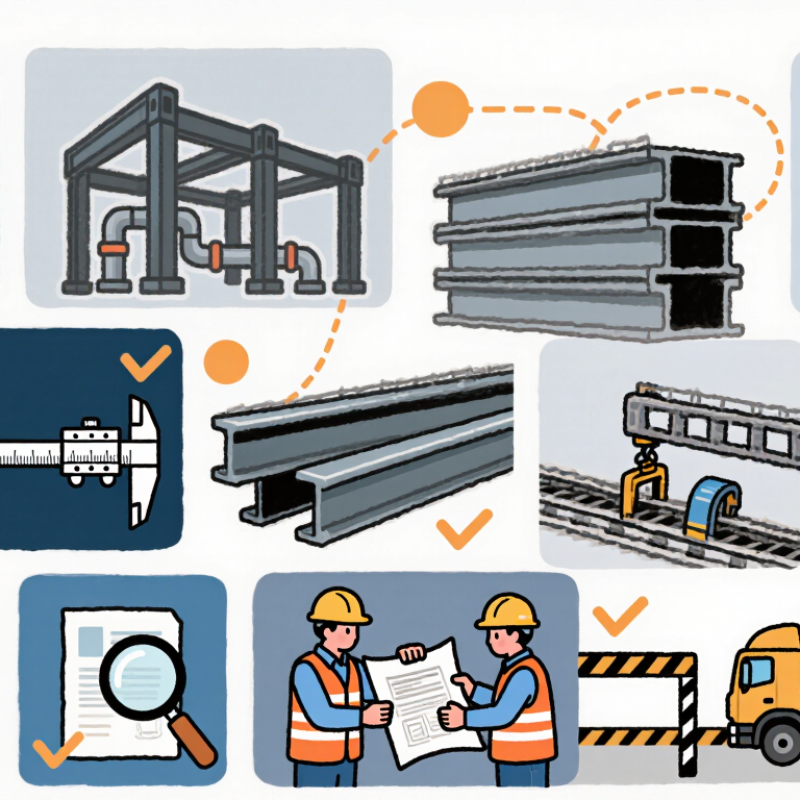
This guide presents 10 steel construction tips for global buyers. It focuses on practical checks that support safer sourcing and clearer technical communication. Confirm the applicable standard before comparing prices. Request traceable test reports. Inspect surface preparation before coating. Clarify packaging, loading photographs, and delivery terms. These steps sound simple. They are often skipped.

Experience also shows that no checklist removes every risk. A certificate can be genuine but incomplete. A reliable supplier may still misunderstand one drawing revision. Buyers should question assumptions, document decisions, and involve qualified engineers when specifications conflict. The following tips are not a substitute for professional design review. They are a disciplined starting point for purchasing steel with greater confidence, transparency, and long-term value.
10 Steel Construction Tips for Global Buyers

Define Project Requirements and Applicable Building Codes

Before requesting steel quotes, document the building’s use, site location, dimensions, clear spans, design loads, and expected service life. A coastal warehouse may face different wind, corrosion, and drainage demands than an inland workshop. Include crane loads, mezzanines, fire protection, insulation, delivery access, and possible future extensions. Small omissions can become costly. A sketch alone is not enough. Ask the design team to translate daily operations into measurable requirements, such as column spacing and allowable floor deflection.

Define the governing jurisdiction and permitting authority before selecting design criteria. Confirm the applicable building and fire codes, referenced steel standards, and required editions. Wind, snow, and seismic assumptions should match the actual site, not a supplier’s generic template. Also distinguish the project location from the fabrication location; different requirements may apply. Have a qualified local structural engineer review the code basis and site data. Even a thorough checklist can miss a local amendment, so verify details with the authority.

Tips: Share a written project brief with every bidder. Record the code edition, load assumptions, corrosion exposure, and design responsibilities. Keep answers and revisions in one dated document. It may feel tedious, but clear records reduce guesswork when designs are reviewed or changed.

Compare Steel Grades, Standards, and Certifications

Steel grades describe material properties, but they do not guarantee that two products meet the same requirements. A grade may specify yield strength, tensile strength, and chemistry; the governing standard defines how those values are tested and reported. Names can mislead. Compare the full designation, product form, thickness range, and test requirements—not just a familiar grade number. For structural sections, plate, and fasteners, the relevant standards may differ, even within one project.

Ask suppliers for material test certificates linked to each heat or batch. Check the reported chemistry and mechanical results against the project specification, and confirm whether impact testing, traceability, or coating documentation is required. A neat certificate is not enough if its heat number cannot be matched to the delivered steel. Keep the trail intact. Also compare the standard’s issuing body and edition with the contract documents; requirements are not automatically interchangeable across markets. When a proposed grade substitution looks equivalent, have the responsible engineer review it in writing. This step can feel slow, and certificate formats are not always easy to compare, but guessing from a short grade label creates avoidable risk.

10 Steel Construction Tips for Global Buyers - Compare Steel Grades, Standards, and Certifications

# Buyer Tip What to Compare or Specify Relevant Standard or Document Practical Check
1 Define the design basis first Confirm the governing design code, load combinations, seismic requirements, and project jurisdiction before selecting steel. Applicable national or regional structural design code Ask the design engineer to confirm the code and edition; products with similar names may not be interchangeable across design systems.
2 Compare grade designations carefully Check specified yield strength, tensile strength, elongation, thickness range, and delivery condition—not just the grade name. Examples: ASTM A36; ASTM A572 Grade 50; EN 10025-2 S355 grades Verify the exact product standard and thickness-dependent requirements. Do not assume that a grade in one standard is an automatic equivalent to a grade in another.
3 Match the standard to the product form Confirm whether the material is plate, hot-rolled section, hollow section, reinforcing bar, or another product. Examples: ASTM A6/A6M for specified structural products; EN 10025-2 for hot-rolled structural steels Check the standard’s scope, dimensional tolerances, testing rules, and any supplementary project requirements.
4 Review the material test certificate Match the certificate to the ordered grade, heat number, dimensions, and supplied quantity; review reported chemical and mechanical test results. EN 10204, including inspection document type 3.1 where specified Require traceable certificates and confirm that heat or batch markings on the material correspond to the documentation.
5 Confirm weldability and fabrication needs Review chemical composition, carbon equivalent where applicable, thickness, restraint, preheat needs, and the approved welding procedure. Relevant material specification; ISO 3834 for quality requirements for fusion welding Have the fabricator or welding engineer assess the actual grade and joint details; a welding-quality standard does not replace the material specification.
6 Specify corrosion protection by exposure Identify atmospheric or other exposure conditions, design life, surface preparation, coating system, and required dry-film thickness. ISO 12944 series for corrosion protection of steel structures by protective paint systems Choose the protection system for the project environment and verify surface-preparation and inspection requirements in the contract documents.
7 Check conformity requirements for the destination market Determine whether the market and product scope require conformity assessment, factory production control, or specific declarations. EN 1090-1 for conformity assessment of structural steel and aluminium components within its applicable scope Confirm applicability with the project’s regulatory requirements. CE marking is not a universal substitute for design approval or material traceability.
8 Separate company certifications from product compliance Assess quality-management systems separately from evidence that the supplied steel meets its ordered specification. ISO 9001 for quality-management systems; product standards and inspection documents for the steel itself Check certificate scope, issuing body, validity, and site coverage. An ISO 9001 certificate alone does not prove a specific shipment’s grade or properties.
9 Verify dimensions, tolerances, and quantities Specify section or plate dimensions, length, tolerances, straightness, surface condition, and permitted substitutions. Relevant product standard and project purchase specification Agree on measurement methods, packing lists, and inspection or acceptance criteria before dispatch.
10 Plan logistics and document control Account for shipping protection, moisture exposure, lifting points, marking, packaging, and the documents needed for customs and site receipt. Purchase contract, shipping documents, packing list, and material test certificates Use consistent item, heat, and bundle identification across the order, certificates, packing list, and delivery inspection records.

Note: Standards and regulatory requirements can vary by product, thickness, project specification, and destination market. Confirm the applicable editions and acceptance criteria with the project engineer and relevant authorities before procurement.

Evaluate Suppliers, Fabrication Capacity, and Quality Controls

For global buyers, supplier evaluation should go beyond a low quotation. Ask who owns the workshop and which processes are outsourced. Request recent project references for structures of similar size and complexity. Verify that the listed contact can explain production steps clearly. Vague answers deserve follow-up. A polished brochure is useful, but it is not proof of capacity.

Tip: Match stated capacity to evidence. Review equipment lists, shift schedules, and current order loads. Ask for a sample production plan showing cutting, welding, inspection, and packing milestones. Then compare promised output with your delivery window. One busy month can change everything. Plans may still slip, so keep reasonable schedule allowances.

Quality controls should be visible in records, not just described in a meeting. Request material certificates, weld inspection reports, dimensional checks, and a clear process for handling nonconforming parts. Confirm how revisions are tracked between approved drawings and shop-floor copies. Small errors can travel far. A practical quality agreement should define inspection points, documentation, and responsibility for corrections. Remote buyers may not see every production detail, and paperwork cannot reveal everything. Combine record reviews with independent inspections when project risk justifies the cost.

Plan International Shipping, Customs, and Delivery Schedules

Treat delivery planning as part of structural design, not a task for the final week. Ask the supplier for a packing list, piece dimensions, gross weights, and loading sequence before production ends. These details help a freight planner choose container or break-bulk space and check port handling limits. Measure twice. Long columns may fit a container on paper but exceed door clearance or local road limits after unloading. Confirm the destination, inland route, lifting equipment, and site access with the receiving contractor.

Prepare customs documents around the actual shipment: commercial invoice, packing list, bill of lading, and origin paperwork where required. Descriptions and quantities should match across documents; one vague line can prompt questions and hold the cargo. Requirements differ by destination, so ask a qualified customs broker to verify classification, duties, and filing deadlines. Leave buffer days. Ports can lose time to congestion, inspections, weather, or missed vessel connections, even when paperwork is correct. Set a latest acceptable arrival date, then work backward from fabrication, booking, customs clearance, and final delivery. Schedules are estimates, not promises; update everyone when dimensions, packing, or vessel plans change.

Assess Installation Needs, Maintenance, and Lifecycle Costs

Before pricing a steel package, check how it will be installed at the actual site. Confirm crane reach, delivery access, lifting points, connection details, and local crew capabilities. A bolt kit that arrives unlabeled can slow an otherwise simple erection sequence. Small details matter. Include temporary bracing and weather delays in the schedule, not just the ideal installation rate. Recheck assumptions against site conditions; drawings rarely show every obstruction.

Maintenance starts with the exposure environment. Coastal salt, industrial pollutants, and trapped moisture can shorten coating life, especially around cut edges and joints. Specify inspection access and a practical coating-repair plan before fabrication. The World Steel Association reports that about 630 million tonnes of steel scrap are recycled annually, but recyclability does not remove the cost of repairs, downtime, or replacement. That gets missed.

Compare lifecycle costs, not only quoted steel prices: include transport, erection, inspections, coating renewal, and eventual dismantling. UNEP and the Global Alliance for Buildings and Construction reported that buildings and construction accounted for 37% of global energy- and process-related CO2 emissions in 2022. This is a sector-wide figure, not a steel-only estimate, but it underlines why operating performance belongs in the evaluation. Model several service-life scenarios. The forecast will still be imperfect. Use it to expose assumptions, not disguise them.

10 Steel Construction Tips for Global Buyers — Assess Installation Needs, Maintenance, and Lifecycle Costs

Compare corrosion-protection options early: a longer service life can reduce access, labor, and recoating costs over the project lifecycle. These indicative ranges vary with coating specification, surface preparation, local exposure, and maintenance.