An insulated steel building is more than a steel frame with panels attached. Its real-world performance depends on the complete envelope: panel joints, insulation continuity, roof details, doors, and installation quality. A small gap at a wall-to-roof junction can undermine an otherwise impressive specification. Details matter.
The Global Alliance for Buildings and Construction’s Global Status Report for Buildings and Construction 2024/2025 estimates that buildings and construction accounted for 32% of global energy use and 34% of energy-related carbon dioxide emissions in 2023. These figures describe the wider sector, not insulated steel buildings alone. They do, however, show why buyers should examine thermal performance alongside cost, durability, and construction speed. A stated insulation value is useful, but it does not tell the whole story. Ask how manufacturers address thermal bridging, air leakage, condensation, corrosion protection, and replacement parts.
This Top 10 overview introduces insulated steel building manufacturers serving different markets and project types. It considers product range, documented technical information, customization, delivery capability, and customer support. Manufacturer data should be checked against project-specific requirements and applicable building standards. The comparison is useful, but never perfect: regional availability, installation partners, and warranty terms can change the outcome. Treat this list as a starting point, not an independently audited performance ranking. A clear specification—and careful review of the proposed assembly—remains essential.
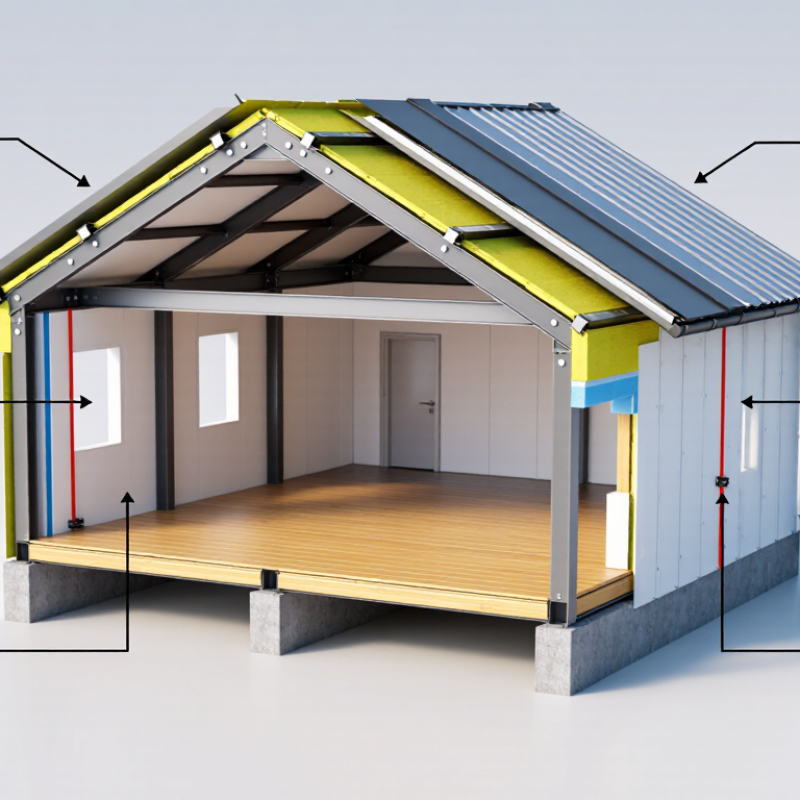
An insulated steel building combines a load-bearing steel frame with insulated wall and roof assemblies. The frame supports the structure, while the surrounding panels or layered walls help limit heat transfer. Insulation may use rigid boards, mineral fiber, or other materials selected for the project. The complete envelope also includes roof seams, doors, windows, and the connections between components.
Small gaps matter. At corners and panel joints, poorly fitted seals can allow drafts or moisture to enter. Steel can also transfer heat through framing members, so thermal breaks and carefully detailed connections may improve performance. Insulation alone does not guarantee a comfortable interior. Climate, building use, ventilation, and condensation control all affect results. A storage building and a heated workshop have different requirements.
When comparing designs, check published insulation values alongside assembly details and installation guidance. For example, a stated wall rating may not represent the performance of the entire building, especially around doors or roof edges. Ask how the design manages vapor and water, and inspect sample joints before installation. These details are easy to overlook. Even well-specified materials can underperform when seams are rushed, and actual energy use will still depend on operation and local conditions.
Design starts with the site, not the steel coil. Engineers assess wind, snow, seismic forces, clear spans, and intended use before setting frame spacing and roof geometry. They also select the wall and roof assembly, including insulation type, thickness, and vapor control. Small details matter. Poorly sealed joints or unaddressed thermal bridges can undermine an otherwise efficient envelope.
UNEP and the Global Alliance for Buildings and Construction reported that buildings accounted for 32% of global energy use and 34% of energy-related carbon emissions in 2023, in their 2024 Global Status Report. That makes envelope performance a practical design concern, not just a specification. Yet insulation values alone do not tell the whole story. Climate, interior humidity, fasteners, and panel connections all affect condensation risk and real-world performance.
In manufacturing, steel coils are unwound, roll-formed, cut, and punched to match approved drawings. Insulated panels are then assembled or produced with their core and facings, depending on the system. Checks may cover dimensions, coating condition, panel thickness, and joint fit. A few millimeters can matter at a seam. No factory inspection can predict every site condition, so clear installation details and careful field checks remain essential. A drawing can still miss something.
About the chart: Typical thermal conductivity values are shown in watts per meter-kelvin (W/m·K). Lower values indicate better insulating performance for a given thickness. These representative values are approximate; actual performance varies by product and conditions. The chart compares materials, not manufacturers.
When comparing insulated steel building manufacturers, look beyond advertised panel thickness. Ask for tested thermal performance, including how joints, fasteners, and steel framing affect heat transfer. A strong insulation value on paper may not reflect the complete wall assembly. Details matter. Request drawings that show roof and wall connections, vapor-control layers, and drainage paths.
Check structural design capacity against your site’s snow, wind, and equipment loads. Ask what steel grades and coating systems are specified, and how exposed cut edges are protected. Review sample calculations, quality-control records, and warranties carefully. Verify whether the manufacturer can provide project references for buildings in similar climates. Clear answers are useful; vague assurances are not. A checklist helps, but it can miss awkward details, so have an experienced engineer review the documents.
Tips: Ask for a sample panel specification and a written explanation of its test conditions. Compare delivered scope, not just quoted price: transport, erection guidance, replacement parts, and lead times can change the real cost. Clarify who handles technical questions after delivery. Small gaps in responsibility can become large delays. No comparison method is perfect; record unanswered questions before choosing.
Top 10 Insulated Steel Building Manufacturers Worldwide is best treated as a research starting point, not a fixed verdict. Manufacturers differ in panel systems, engineering support, delivery capacity, and regional experience. A useful comparison looks beyond glossy project photos. Details matter. Ask how the wall and roof panels manage heat loss, moisture, and thermal bridging at joints, corners, and fasteners.
Request technical data for insulation values, steel coatings, fire performance, and load calculations. These should match the building’s climate and intended use. A cold storage facility, workshop, and livestock building have different needs. Check the joints. Poorly sealed connections can invite drafts or condensation, even when panels look substantial. Ask for installation guidance, documented testing, and references for projects with similar conditions. Not just price.
A worldwide shortlist may include suppliers with very different local support. Confirm who answers technical questions, supplies replacement panels, and handles warranty claims in your region. Review the proposed foundation and frame interfaces before ordering; small dimensional mismatches can slow installation. I would also question any ranking that gives every buyer the same “best” choice. That is convenient, but not very realistic. Compare specifications against the actual site, then have a qualified local professional review the design.
Comparing the top ten insulated steel building manufacturers requires more than checking catalog size. Look at engineering support, fabrication capacity, and documented performance data. Ask how the supplier handles wind and snow loads, panel joints, and thermal bridging. Small gaps matter. They can allow heat loss or moisture buildup. A clear installation guide and responsive technical team can be as valuable as a wide product range.
Products and markets vary. Some manufacturers focus on pre-engineered frames with insulated metal panels; others offer broader options for roofs, walls, doors, and interior finishes. Compare insulation values, panel thicknesses, coatings, and available spans against the project’s climate and intended use. Also check typical lead times and shipping coverage. A product suited to a dry inland site may need different corrosion protection near the coast. Published specifications help, but they do not answer every site-specific question.
Tips: Request drawings, load calculations, and panel details for the actual building—not just a brochure. Compare like with like. Confirm who provides design assistance and what installation training is available. One limitation: manufacturer data may use different test conditions, so a neat comparison table can still mislead. Ask for clarification when figures seem unusually favorable.
An anonymized overview of representative manufacturer profiles and established industry product categories. Profiles are not named companies or a verified performance ranking; specific offerings vary by manufacturer, project, and region.
| Profile | Primary Market Region | Typical Building Products | Insulation Systems | Common Capabilities | Typical End Markets |
|---|---|---|---|---|---|
| Profile 1 | North America | Pre-engineered steel buildings, structural frames, roof and wall panels | Insulated metal panels; insulated roof and wall assemblies | Building design coordination, project engineering, fabrication, and packaged building systems | Warehouses, manufacturing plants, agricultural buildings, and commercial facilities |
| Profile 2 | Western and Central Europe | Portal-frame buildings, steel structures, metal roof and façade systems | Factory-made sandwich panels and multilayer insulated envelope systems | Building-envelope design support, thermal-performance options, and project-specific fabrication | Industrial buildings, logistics centers, retail, and public-sector projects |
| Profile 3 | China and wider East Asia | Steel frames, modular building components, roof and wall cladding | Insulated sandwich panels, including metal-faced panel systems | High-volume component production, modular solutions, and export-oriented supply | Factories, logistics facilities, commercial buildings, and temporary or modular structures |
| Profile 4 | India and South Asia | Pre-engineered buildings, portal frames, secondary steel members, and cladding | Insulated metal panels and composite roof or wall assemblies | Design-to-fabrication services and project packages suited to local construction conditions | Industrial plants, warehouses, agricultural facilities, and infrastructure support buildings |
| Profile 5 | Japan and South Korea | Precision steel building systems, structural components, and metal envelope products | Insulated panels and coordinated high-performance wall and roof assemblies | Precision manufacturing, detailed engineering, and integration with demanding building specifications | Industrial facilities, commercial buildings, cold-chain sites, and specialized plants |
| Profile 6 | Turkey and Eastern Mediterranean | Steel building frames, roof and façade cladding, and prefabricated structures | Sandwich panels and insulated metal building envelopes | Fabrication for domestic projects and export supply across nearby markets | Factories, warehouses, agricultural buildings, and commercial developments |
| Profile 7 | Australia and New Zealand | Steel building frames, industrial sheds, roof and wall systems | Insulated panels and roof or wall assemblies selected for local climate requirements | Regional engineering and supply for projects subject to local building and wind-load requirements | Agriculture, mining support, logistics, manufacturing, and commercial uses |
| Profile 8 | Gulf states and Middle East | Pre-engineered steel buildings, structural frames, and metal cladding | Insulated panels and envelope systems designed for heat control | Large-project coordination, regional delivery, and systems adapted to hot and arid conditions | Industrial plants, logistics facilities, commercial buildings, and infrastructure projects |
| Profile 9 | Brazil and wider Latin America | Steel structures, industrial building systems, roof and wall cladding | Insulated metal panels and composite envelope options | Regional fabrication and project supply for industrial and agricultural construction | Manufacturing, agribusiness, warehousing, and commercial facilities |
| Profile 10 | Multi-region international suppliers | Steel framing packages, insulated panels, and coordinated building-envelope components | Panelized insulation systems; specifications depend on local codes and project needs | Cross-border project support, technical documentation, and coordination with local contractors | International industrial, logistics, commercial, and cold-storage projects |